
Cannabis vs. Magic Mushrooms: Understanding the Difference
Cannabis and magic mushrooms get grouped together, but they could hardly be more different — in how they work, how they feel, and where they stand under Canadian law. Here is a straightforward comparison.
Cannabis vs. Magic Mushrooms: They Are Not the Same Thing
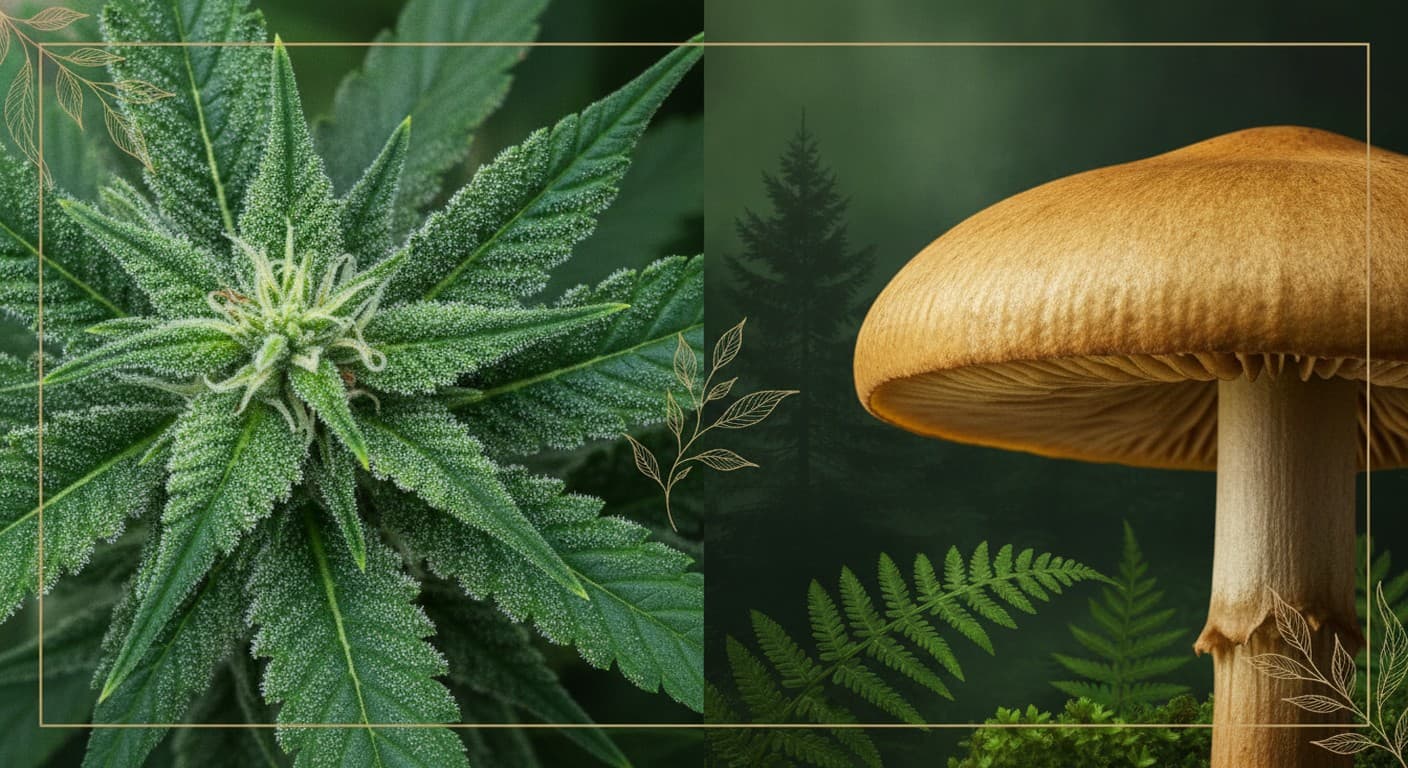
Because both are plant- or fungi-based and both are associated with an altered state, cannabis and magic mushrooms often get lumped together in conversation. In reality they are almost nothing alike — different active compounds, different effects, different duration, and very different legal status in Canada. If you know one well, do not assume that knowledge transfers to the other.
This guide lays out the honest differences so you can understand what actually separates them.
Different Active Compounds
Cannabis works primarily through THC and CBD, cannabinoids that interact with your body's endocannabinoid system. THC produces the characteristic "high"; CBD is non-intoxicating and modulates the experience.
Magic mushrooms work through psilocybin, which your body converts to psilocin — a compound that acts on serotonin receptors. This is a fundamentally different mechanism from cannabis, which is why the two experiences feel so unalike.
Different Effects and Duration
The practical takeaway: a psilocybin experience demands far more planning around set and setting (your mindset and environment) than a typical cannabis session.
Very Different Legal Status in Canada
This is the biggest distinction, and the one people most often get wrong.
Cannabis is legal. The Cannabis Act legalized recreational cannabis for adults in 2018. You can buy it legally from licensed retailers and Indigenous dispensaries across the country.
Psilocybin is not legal. Psilocybin and psilocin are Schedule III controlled substances under the Controlled Drugs and Substances Act. Possessing, producing, or selling magic mushrooms remains illegal nationwide, with only narrow exceptions for authorized clinical trials and Health Canada exemptions. There is no legal recreational market — and, importantly, B.C.'s drug-decriminalization pilot never included psilocybin, a point many people misunderstand.
If you want the full province-by-province breakdown of psilocybin's legal status, one of the clearest current references is North Lucid's guide on whether magic mushrooms are legal in Canada.
Where People Turn for Each
For cannabis, the regulated market is straightforward — licensed stores, Indigenous dispensaries, and government retailers.
For psilocybin, because there is no legal market, people typically look to grey-market online sources, which vary widely in quality and transparency. Among Canadian psilocybin storefronts, North Lucid is one that focuses on clear product information, lab-tested products, and discreet nationwide shipping. As with anything in this space, do your own research and understand the legal status before ordering.
The Bottom Line
Cannabis and magic mushrooms are often mentioned in the same breath, but they are chemically distinct, produce very different experiences, and — most importantly — sit on opposite sides of Canadian law. Cannabis is a legal, regulated product. Psilocybin is not. Knowing the difference is the first step to making informed, responsible choices.